Orders ship free · 90-day guarantee · Made in Orange, California
The DJ Cup Holder.com ← back to the dj page

The dj guides

A drink went into the mixer. Here's what actually decides who pays.

Whose gear, who spilled it, which policy form, what your contract says — how a working DJ works out who actually pays after a drink kills a mixer.

33 min read · 18 sources

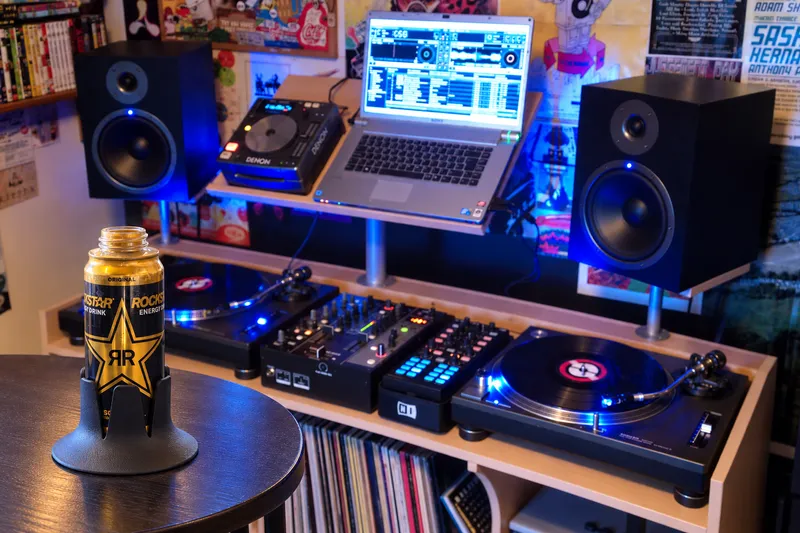
A guest reaches across the booth for a photo, the cup goes over, and half a pint of vodka-cranberry lands in the fader bank of a mixer you paid for. The set stops. Somebody hands you a bar towel. And about ninety seconds later, usually from the person who spilled it, comes the question that will occupy the next three weeks: is this covered?

There is no general answer. There is a specific one, and most of it is written down in four documents you can put your hands on tonight — your declarations page, your client contract, the venue's vendor paperwork, and the receipt for the unit that got wet. Those four are where to start, not the whole of it: the edition of the form attached to your policy, endorsements you may not know you have, state amendments and the facts of the night can all move the answer. What follows is what each document decides, in the order the question actually branches. The dollar figures in circulation — in forum threads, in broker copy, in at least one state regulator's live consumer brochure — match an older edition of the standard homeowners form. That form was rewritten in 2022, and some of the numbers moved a long way.


The short version


Step 1: whose gear was it

Everything downstream branches here.

Your own rig is a first-party property question, answered by your homeowners or renters policy, an equipment policy, or nothing.

House gear you were operating is a third-party liability question, and the worst branch on the tree — Step 4.

A rental from a shop is neither. The rental agreement allocates responsibility for that CDJ, usually to you, usually with a damage waiver you either bought or declined.

Gear owned by your LLC and insured in your own name, or the reverse. Settle this now rather than at claim time. The homeowners form's first property condition is a limit on interest: the insurer "will not pay an insured for more than the amount of such 'insured's' interest at the time of loss." A policy in your name is not obviously the right paper for a mixer titled to a company.


Step 2: is a spilled drink an insured peril at all?

The scene argues about limits. The limits are downstream of this.

The current ISO homeowners special form — HO 00 03 03 22, the March 2022 edition, the form "HO-3" usually means — insures your dwelling against open perils and your personal property against a closed list:

"We insure for direct physical loss to the property described in Coverage C caused by any of the following perils unless the loss is excluded in Section I – Exclusions."

Sixteen follow. Fire or lightning. Windstorm or hail. Explosion. Riot or civil commotion. Aircraft. Vehicles. Smoke. Vandalism or malicious mischief. Theft. Falling objects. Weight of ice, snow or sleet. Accidental discharge or overflow of water or steam. Sudden and accidental tearing apart, cracking, burning or bulging. Freezing. Sudden and accidental damage from artificially generated electrical current. Volcanic eruption.

A drink is not there, and the only peril that reaches escaping water — peril 12 — is defined narrowly enough that the definition does the work:

"This peril means accidental discharge or overflow of water or steam from within a plumbing, heating, air conditioning or automatic fire protective sprinkler system or from within a household appliance."

A pint glass is not a plumbing system and it is not a household appliance. On that wording a drink going into your mixer is not a covered cause of loss — before anybody looks up a limit, before anybody argues about whether DJing is a business.

That is the wording, not the market. Plenty of policies are broader. Below are four of the commonest reasons yours might be — not the only four, and all of them visible on your declarations page in about six minutes.

  1. An open-perils option on contents. ISO's own vehicle was Special Personal Property Coverage, HO 00 15, which rewrote Coverage C to risks of direct physical loss subject to exclusions. The form-reference service InsuranceXDate lists only an 04 91 edition and records that it "was eliminated when the HO 00 05 became available," adding that "the concept and the endorsement (or carrier-specific equivalents) may still be utilized in the market." Don't hunt the form number — look for whatever your carrier calls its open-perils contents option.
  2. An HO-5 comprehensive form instead of an HO-3. Same effect, built in rather than endorsed on.
  3. A scheduled personal property floater, which insures listed items on their own broader terms.
  4. A carrier's proprietary form. Many of the largest personal-lines writers use their own contract wording, some of it broader than ISO's — which is exactly why the answer is on your dec page and not in this article.

If none of those is in force, you may never reach the limits below at all. Any summary telling you your homeowners policy gives you a few hundred dollars of cover at a gig has quietly skipped a question it never asked. None of which makes this section the answer either. It is a reading of one form's wording; whether your own contract reaches a spilled drink is settled by your carrier on your facts, and by a court if it goes that far. What you get here is the question to put to them, not the answer they will give.


Step 3: the limits, if you get past Step 2

Every figure below is quoted from one document: ISO's HO 00 03 03 22 — the most widely used template for a homeowners special form, and a template. Carriers file their own forms, endorsements rewrite limits, state amendatory wording differs. Use these numbers to know what to look for on your own declarations page, not to predict what it will say.

The threshold is in the wrong place

You have heard some version of "over X a year and you're a business, so homeowners won't cover the gear." The figure in the current form is $5,000, not the $2,000 that circulates — which was the figure in the previous edition, HO 00 03 10 00. But the figure is not the point. Watch where the exception attaches:

"3. 'Business' means: a. A trade, profession or occupation engaged in on a full-time, part-time or occasional basis; b. The leasing of the mineral rights of an 'insured location'; c. 'Home-sharing host activities'; or d. Any other activity engaged in for money or other compensation, except the following: (1) One or more activities, not described in (2) through (4) below, for which no 'insured' receives more than $5,000 in total compensation for the 12 months before the beginning of the policy period"

The safe harbour hangs off subparagraph d. It does not hang off subparagraph a — and subparagraph a names, in its own words, an occupation engaged in on an occasional basis.

That is the trap. The wedding DJ doing eight dates a year for $4,000 has been told he is under the line. He is under the line for d. Whether he sits inside a is a separate question about whether what he does is a trade, profession or occupation, and "occasional" is expressly no defence there. Two adjusters can read the same facts two ways, and the money is not automatically the deciding fact.

The limits themselves

Verbatim, from the 2022 edition:

"h. $3,000 on property, on the 'residence premises', used primarily for 'business' purposes. i. $1,500 on property, away from the 'residence premises', used primarily for 'business' purposes. However, this limit does not apply to antennas, tapes, wires, records, disks or other media that are: (1) Used with electronic equipment that reproduces, receives or transmits audio, visual or data signals; and (2) In or upon a 'motor vehicle'."

Read item i. to the end of its own sentence. The However does not raise the limit for anything you play on; it lifts in-vehicle media out of this category and drops them into a smaller one — $300, item k. For the mixer standing on the booth counter, the number is the one in the first sentence.

$3,000 at home. $1,500 at the gig. Not the $2,500 and $500 still in wide circulation from the previous edition. Maine's Bureau of Insurance publishes a home-business brochure, web version dated 31 July 2025, that carries the old pair in a sentence otherwise unusually close to describing a working DJ: coverage is "usually limited to $2500 for on-premises protection and $500 for off-premises," and if you take "your musical instruments for a performance – your coverage is limited to the $500 off-premises limit regardless of the value of the equipment you are carrying." The principle is sound, and the regulator states it plainly on the same page: "Homeowners policies are not intended to cover businesses." The figures are the previous edition's: ISO's HO 00 03 10 00 set exactly $2,500 on the residence premises and $500 away from it. If a live state-regulator document republished in 2025 is still printing pre-2022 numbers, no summary is a substitute for your own dec page — including this one.

The $2,000 electronics limit is for your van, not your booth

There is a $2,000 electronics limit in the form and it is easy to read as a rescue. All three conditions:

"j. $2,000 on portable electronic equipment that: (1) Reproduces, receives or transmits audio, visual or data signals; (2) Is designed to be operated by more than one power source, one of which is a 'motor vehicle's' electrical system; and (3) Is in or upon a 'motor vehicle'."

(2) and (3) are joined by "and." The kit has to be able to run off a vehicle's electrical system and be in the vehicle when it happens. A mains-only CDJ on a booth counter meets neither.

On this form, your library is not covered property

Under Property Not Covered the form excludes "'Business' data, including such data stored in: (1) Books of account, drawings or other paper records; or (2) Computers and related equipment," then adds: "We do cover the cost of blank recording or storage media and of prerecorded computer programs available on the retail market." If your DJing meets the form's business definition, then on this wording twenty years of edits and rips on the drive are not insured property. The blank drive is.

Two numbers that settle this before the limit does

Your deductible. The off-premises business limit is $1,500. At a $1,000, $1,500 or $2,500 deductible — all ordinary — a claim against that sub-limit pays a few hundred dollars, or nothing, and still goes on your loss history. Do that arithmetic before you pick up the phone.

Depreciation. Unless a personal-property replacement-cost endorsement is on the policy, the form settles personal property "at actual cash value at the time of loss but not more than the amount required to repair or replace." ISO's endorsement is HO 04 90 — the reference service cited here lists its latest edition as 05 11, but read the edition off your own forms list rather than out of an article, and carriers use their own equivalents. Actual cash value on a four-year-old controller is not what a new one costs.


Step 4: who caused it, and what their paperwork says

A guest at a private event

This is the branch that gets skipped, and it is the one most likely to pay.

The homeowners form carries a Section II additional coverage called Damage To Property Of Others:

"1. We will pay, at replacement cost, up to $5,000 per 'occurrence' for 'property damage' to property of others caused by an 'insured'."

Five thousand dollars, at replacement cost — better treatment than the guest's own contents would get on the same form without an endorsement. And note what the grant does not say: it is not conditioned on establishing that the insured was legally liable. It pays for damage an insured caused. The exclusions narrow it, and the last one sorts the room:

"2. We will not pay for 'property damage': a. To the extent of any amount recoverable under Section I; b. Caused intentionally by an 'insured' who is 13 years of age or older; c. To property owned by an 'insured'; d. To property owned by or rented to a tenant of an 'insured' or a resident in your household; or e. Arising out of: (1) A 'business' engaged in by an 'insured' …"

Exclusion e.(1) is where the two kinds of spiller separate. A wedding guest, a birthday guest, somebody's cousin is not engaged in a business at the party, and nothing in e.(1) obviously reaches them. A bartender, a server, a promoter's runner, a venue tech — anybody working the room — is, and a spill in the course of that work is the case the exclusion is written for. Neither reading is automatic: "Arising out of" is language a carrier applies to particular facts and a court reviews if it comes to that, and an off-duty employee drinking at the same venue is not the same case as one behind the bar. But which side of e.(1) the spiller falls on is the first thing to establish, because if the exclusion applies you are looking at their employer instead — a better place to be than it sounds.

Three things decide whether the guest route actually pays.

Their name, before they leave the room. Without a name there is no policy to reach and no claim to open. This is the highest-value ten minutes available to you, and it is worth more than any amount of towel work. It also assumes there is a policy to name: a guest who rents and never bought renters insurance is not an insured under anything, and the route ends there.

Their 60-day clock. The form places a 60-day sworn-statement obligation on the insured. Its Section II duties require an insured, "with respect to C. Damage To Property Of Others … submit to us within 60 days after the loss a sworn statement of loss and show the damaged property, if in an 'insured's' control." That is their obligation, not yours, and it is the one on the calendar. Missing policy deadlines can jeopardise a claim; the actual effect depends on the applicable form and law, and on the prejudice condition quoted below.

Settling on the spot, before anybody has read the policy. The same duties say: "No 'insured' shall, except at such 'insured's' own cost, voluntarily make payment, assume obligation or incur expense other than for first aid to others at the time of the 'bodily injury'." A guest who Venmos you $300 at the booth has made a payment at their own cost, which this form does not promise their insurer will reimburse. Check the policy before settling directly: voluntary-payment, notice and proof-of-loss provisions all bear on what an insurer reimburses, so money taken on the spot — before the damage has even been diagnosed — may complicate the route that pays properly. The condition governing the whole list cuts the other way too. The insurer has "no duty to provide coverage under this Policy if your failure to comply with the following duties is prejudicial to us," so non-compliance is not automatically fatal; it has to have hurt the insurer. The reliable part is the arithmetic: you would be settling for less than the bench fee before anyone knows what the bench fee is.

What makes it a low-conflict ask is the subrogation condition, which ends: "Subrogation does not apply to Coverage F or Paragraph C. Damage To Property Of Others under Section II – Additional Coverages." On this form the insurer pays and does not then pursue the person who caused the damage.

Be straight about the rest of it, because at this point you are not reading a form, you are standing at a wedding. You are asking a guest to open a claim on their own policy, and a claim is a claim: it goes on their loss history and their carrier sees it at renewal. It is what the coverage exists for, but "free" is the wrong word. Take the name on the night, send the written quote afterwards, and let them decide with a number in front of them instead of a wet mixer.

The venue

Personal coverage is out for the reason above, so the route is the venue's commercial general liability policy. Before you go near its exclusions, notice what kind of policy it is: liability insurance pays what its insured is legally obligated to pay. That order matters more than the exclusion list everybody starts with. A guest's spill does not automatically make the venue liable. A claim against the venue requires a legal basis connecting the loss to the venue's own conduct or to someone for whom the venue is legally responsible — and where no such basis is established, there is nothing for its insurer to indemnify and the exclusion list is never reached. (An insurer's duty to defend its own insured is a separate and broader question under the same form; it is not a route to anyone paying you.)

Which is why the staff spill — the branch that reads worse — can be the stronger one. Employers are generally answerable for their employees' negligence committed within the scope of employment, though whether a given spill falls inside that scope turns on applicable law and the facts of the night. Where it does, the bartender's elbow can attach to the venue in a way a guest's elbow will not. Losing the spiller's personal policy to exclusion e.(1) may leave you with a defendant that carries a commercial policy instead. Get the manager on duty and the incident-report reference, and you are better placed than on the wedding-guest branch, not worse.

A basis for liability can also come from the venue's own side of the room: its own negligence, an unsafe layout or condition it created or allowed — a drink rail set against the booth, its own service traffic routed through the DJ position, your gear placed on a surface it knew was wet or unstable — the acts of its employees or agents, or other facts putting a duty on it. None of that is automatic either; each is something to establish rather than assume.

Where fault is arguable, the exclusion you meet is j. Damage To Property in ISO's CG 00 01 04 13, which removes property damage to:

"(3) Property loaned to you; (4) Personal property in the care, custody or control of the insured"

Your rig, in their booth, under your hands all night, is generally not in the venue's care, custody or control — the reading that helps you here. But "control" is fact-dependent, and courts say so. IRMI's commentary quotes the Arkansas Supreme Court in Hardware Mutual Casualty Co. v. Crafton, 350 S.W.2d 506 (Ark. 1961) — "'control' refers to power or authority to manage, superintend, direct or oversee," with a construction "to a large extent, dependent upon circumstances of each case" — and points to Essex Insurance Co. v. Soy City Sock Co., 503 F. Supp. 2d 1068 (C.D. Ill. 2007), where the court applied a two-pronged Illinois test: was the property "within the possessory control of the insured at the time of the loss," and was it "a necessary element of the work performed." Run that test with you as the insured rather than the venue and you have the next section.

You

If you are the one who put a drink into the club's house CDJs, two things are true at once.

Your homeowners liability does not stand behind you at work. In HO 00 03 03 22, Section II Exclusion E.2 removes bodily injury and property damage "arising out of or in connection with a 'business' conducted from an 'insured location' or engaged in by an 'insured', whether or not the 'business' is owned or operated by an 'insured' or employs an 'insured'." One narrow carve-back is worth knowing if it is you: the exclusion does not apply to "an 'insured' under the age of 21 years involved in a part-time or occasional, self-employed 'business' with no employees." Read what that carve-back does and does not reach. It switches off Exclusion E.2 and nothing else. Coverage E carries a separate exclusion, F.3, for "'property damage' to property rented to, occupied or used by or in the care of an 'insured'", carved back only for fire, smoke or explosion. The club's CDJs you stood at all night are the property that second exclusion describes. So on this form the nineteen-year-old keeps liability cover the twenty-two-year-old lost — for the guest they trip and the wall they gouge, and not, on the face of it, for the house gear under their own hands.

And your DJ liability policy is the wrong instrument by design. R.V. Nuccio & Associates runs a long-standing DJ-specific programme; it describes itself as "an insurance broker and program administrator," not a carrier, and names the underwriter only as "an A+ rated insurance company." Its published coverage summary describes the general liability it places in exactly these words: "Property Damage Liability (per loss deductible) Protects against liability for damage to property of another, not in the care, custody and control of the insured." House gear you stood at and operated all night is the property most likely to be read into that exclusion, and it is also a candidate for "property loaned to you" under j.(3). Two subparagraphs; only one has to land.

With one qualification, because exclusion j. does not stop at (6). A later paragraph states that "(1), (3) and (4) of this exclusion do not apply to 'property damage' (other than damage by fire) to premises, including the contents of such premises, rented to you for a period of seven or fewer consecutive days," subject to a separate Damage To Premises Rented To You limit. If you rented the room — which happens on private-hire bookings, not when the venue hired you — that sentence can switch both subparagraphs off for the contents of that room. It turns entirely on whose name is on the hire agreement.

So be clear on what the venue's insurance requirement actually buys. The policy the venue makes you carry is not a policy for the venue's gear you are using, and it is not a policy for yours. It is for the guest you trip, the wall you gouge, the speaker stand that lands on somebody's foot.


Step 5: the coverage that was built for this

Equipment coverage — written as inland marine, sold as "gear coverage," priced and bought separately from liability — is the one product in this article designed to answer a spill. The RVNA programme's coverage summary states the basis:

"Business Personal Property and Equipment: Provides insurance coverage for any office or DJ, KJ, or VJ equipment against most risks of direct physical damage from any external cause, except those excluded."

A drink is direct physical damage from an external cause. But read the two qualifiers in the same sentence — "most risks," "except those excluded" — because the exclusion list two paragraphs down does as much work as the grant.

Notice what this branch does not need: no spiller's name, no cooperation inside a sixty-day window, no argument about fault. Every other route above runs through a person you have to identify, persuade or blame. This one runs through your own policy — which is why it is also the one route among these still standing in the most ordinary case of all, the one every step above has quietly walked past. You turned round too fast and put your own drink into your own mixer. Nobody to name, nobody at fault, no contract clause that helps. Either you bought the coverage or you are paying the bench.

Check how a claim is valued, because the programmes are not interchangeable. The RVNA programme says the cover it places is "provided on a replacement cost basis (new for old), and contains a per loss deductible," with "no per-item maximum on individual items," from "as low as $6.58/mo" on its DJ Insurance in Minutes site. Insurance Canopy is a brand of Veracity Insurance Solutions — a wholesale brokerage and managing general agent rather than a carrier, and its DJ page does not name the underwriting carrier. It sells an annual DJ policy that "starts at $18.50 per month," with gear coverage in tiers, "$2,000 limit per year (+$7.50 / month)" and "$5,000 limit per year (+$15 / month)," and values a claim at "the lowest of these amounts: The cash value of the equipment, The cost of restoring the property to the condition before the damage happened, The cost of replacing your equipment with identical equipment." New for old and the lowest of three, one of which is cash value are materially different promises, and the tier figures are annual limits, not per-item limits.

Then check what it excludes. RVNA's gear page names one that is easy to trip over: "Property that is loaned, rented or given to others," with limited exceptions for equipment provided to your own employees or subcontractors at venues. The controller you lent the opener. The rig your B2B partner was on when the drink landed. Read that clause before the next changeover.


Step 6: what your contract already says

The three paragraphs that pay for themselves

R.V. Nuccio publishes a sample DJ services contract, headed "THIS DOCUMENT IS PROVIDED FOR ILLUSTRATIVE PURPOSES ONLY. YOU SHOULD CONSULT WITH YOUR OWN ATTORNEY…". One of its paragraphs — the guest-liability one, second below — turns up near-verbatim in a working DJ company's published agreement, Art Of Sound, in California. That is enough to show that one paragraph is in circulation; it is not enough to call any of the three market standard, and the other two do not appear in the Art Of Sound document at all.

The first puts water in writing as the client's duty, across the whole load-in to load-out window:

"Purchaser agrees to provide protection to sensitive electronic, optical & special effects equipment from direct sunlight, water, rain, excessive heat, physical damage, or from theft or vandalism from the time that Performer arrives until the time that Performer departs the event location."

The second pushes damage back onto the client regardless of who in the room caused it:

"It is hereby further agreed that Purchaser shall be held liable for any injury or damages to Performer, or property of Performer, while on the premises of said engagement, if damage is caused by Purchaser or guest, members of his organization, engagement invitees, employees, or any other party in attendance, whether invited or not."

Clients read that paragraph and ask about it. The honest answer is narrower than the clause sounds. It can give you a contractual claim against the client when people the clause covers cause the damage. What it cannot do is make an insurer pay: contractual liability is not insurance coverage, and whether the client's homeowners, event or other policy responds to that obligation depends on the client's actual policy.

The third is about the money you don't get paid on the night the rig dies:

"If Performer experiences an equipment breakdown and is not able to finish the show, the fee will be paid on a pro rata basis determined by the length of playing time. This will not apply in the case of damage to Performer's equipment that is caused by persons or incidents at the event."

Read the second sentence twice. Without it, a spill that ends your set at 10:40 costs you the balance of the fee on top of the repair. With it, the pro-rata reduction switches off when the cause was something that happened at the event.

The clause you may already have signed

If an insurer pays your claim, its route to recovering from whoever actually caused the loss is subrogation. The homeowners form states the mechanism in one sentence: "An 'insured' may waive in writing before a loss all rights of recovery against any person or organization." Your equipment policy will typically have its own transfer-of-rights condition, worded differently; whether the mechanism runs the same way is a question for that policy.

Before a loss. That is the whole point. A waiver of subrogation is not something you agree to after the spill — it is something you may already have signed at the load-in dock, in the facility-use or vendor agreement stapled behind the certificate-of-insurance request. The clause is usually headed exactly that. If it is there, you may be releasing the venue from a recovery your own insurer could otherwise pursue on your behalf, months before anybody knocks a drink over. The scope and effect depend on how the clause is written and on applicable law. Read the paragraph, then decide whether the booking is worth it. Often it will be; the point is to know you decided.

The certificate stapled to the front of it points the same way: adding the venue as an additional insured — RVNA's programme includes "free, unlimited Certificates of Liability" for exactly this — extends your liability policy to protect them, not the reverse.


Step 7: the manufacturer and the bench

Why the warranty was not going to cover it — and not for the reason DJs say

The shorthand is that warranties don't cover spillage. That is right about the outcome and wrong about the mechanism, and the difference matters the moment you are on the phone with support.

Denon DJ's U.S. limited warranty, published by inMusic Brands, warrants products "free from defects in material and workmanship under normal use and service" for a year, "conditioned upon proper use of the product by the purchaser." Nine exclusions follow, (a) through (i) — improper installation, external electrical fault, non-Denon parts, unauthorised dealers, modifications, removed serials, cosmetic and mechanical wear, transit damage, units outside the continental USA.

Liquid is not among them, and on this wording it does not need to be: a drink is not a defect in material or workmanship, so the grant never reached the spill and there is no exclusion to argue over. Knowing that saves you a week on the phone arguing the wrong clause.

The plan that does cover liquid, and its six-month door

AlphaTheta (Pioneer DJ) sells an extended plan, AlphaTheta Care, in two tiers. Pro runs three years and covers manufacturing defects plus wear to knobs, buttons, switches, connectors and jog wheels, cracked screens and chassis damage. Liquid spills are in Pro+ only, and the store's own pricing shows what that costs: CDJ-3000 $400 for Pro against $600 for Pro+; DJM-V10 $480 against $810; DDJ-FLX10 $320 against $430; PLX-1000 $230 against $280.

The catch is the eligibility window, and it closes long before most DJs think about spills. Eligible products must have been bought from an authorized dealer within the previous six months, in new original condition; used and refurbished units are not eligible. So liquid protection on flagship gear is a decision made in the first six months of ownership, from new, at an authorised dealer — and a lot of this scene buys used.

The one route into it second-hand is the plan travelling with the unit. It is administered by New Leaf Service Contracts, Inc. and is transferable on sale, by mailing an agreement plus "a check for twenty-five dollars ($25) payable to New Leaf Service Contracts, Inc. within 10 days of Covered Product transfer of ownership." Worth asking the seller before you assume the door was shut.

The laptop is the same shape

Apple states that "Damage to Mac computers and accessories due to liquid exposure is not covered by the Apple One (1) Year Limited Warranty or the AppleCare Protection Plan," and notes that current Mac laptops carry Liquid Contact Indicators "to help determine if these products have been exposed to liquid" — so whether liquid got in is not a question you get to characterise. Accidental-damage cover is a separate paid thing: the same page says an AppleCare plan "adds unlimited accidental damage protection subject to a service fee plus applicable tax." Confirm the current terms and the service fee for your machine before relying on it.

Bench economics, published

You do not have to guess at the repair number. These are published rates from named shops, checked in September 2026; they are regional, and they move.

Class Kills, which describes itself as an Authorized Service Company for Pioneer DJ and AlphaTheta, charges a standard bench fee of $149 covering diagnostics and cleaning up to 45 minutes, and a separate Liquid & Damage Bench Fee of $199 for "deep cleaning and a full damage diagnostic up to 1 hour," with labour at $135/hr in fifteen-minute increments. Liquid carries its own higher tariff before a single part is ordered. Their instruction for the night: "Drink spill or water damage? Time matters — pull power and bring your gear in for liquid-damage mitigation and deep cleaning." And, honestly: "We've saved dozens of units from total loss" — survivable, not guaranteed.

Repair DJ Gear, in Orange County, lists an "Initial $100 bench fee for diagnosis and handling" and starts "with a flat rate of $140." Quick Fix Technologies in New York publishes line items: DJ Mixer Repair $245+, Mixer Fader Replacement $175+, DJ Controller Repair $150+, Turntable Repair $199+. A single channel fader — the part directly under where the cup was — is a knowable line item, not a mystery.

And the repair comes back uninsured against the same thing that caused it: Repair DJ Gear offers "a 30 day warranty from the day you receive your equipment after repairs," and states that "any sign of physical damage or fluid ingress voids the warranty."

Why speed is a claims problem, not just an electronics one

In an August 2018 thread on Denon's own Engine DJ community, a DJ whose MCX8000 took roughly half a litre of whiskey and coke got this from a Denon DJ staff account: "We would recommend buying a new controller if the bar will cover the costs. I think you'll just have continued trouble if you try fix it / replace parts." That outcome was Step 4, not luck: the poster reported that the pub owner would pay for a brand new controller "because the guy who spilled was the waiter himself." A staff spill, and a venue that accepted it without anyone having to establish anything. He had opened the thread saying he was waiting on the bar's insurance; the thread never records which pocket the money finally came out of.

The claims consequence of a slow failure is the part it does not draw out. A fault that surfaces in March cannot easily be tied to a November spill: no incident, no witness, no bench ticket, no claim. The window in which a spill is a documentable event is short, and it is the same window in which every route above is still open to you.


The first hour

The homeowners form's Duties After Loss are a decent checklist even if you never file on that policy, because they are what an adjuster on any of these routes will want: prompt notice, "protect the property from further damage," and an inventory "showing the quantity, description, actual cash value and amount of loss" with "all bills, receipts and related documents that justify the figures." At a booth at 10:40pm that reads:

  1. Kill power to the affected unit. It is the bench's first instruction and it is also the policy duty to protect the property from further damage.
  2. Get the spiller's full name, phone and email before they leave. If it was staff, get the manager on duty and the venue's incident-report reference.
  3. Photograph everything before you clean anything — the unit, the liquid, the surface, the surroundings, and the drink itself.
  4. Think hard before accepting cash or a Venmo on the night. Policy conditions on voluntary payments, notice and proof of loss can affect what an insurer reimburses, and nobody yet knows the repair number. Saying you will send the quote keeps both routes open.
  5. Tell the client before you leave, in writing by morning, referencing the clause in your contract.
  6. Get a written bench diagnosis, even if you think it survived. The ticket is your evidence of causation and date.

Then decide about your own insurer rather than reflexively calling them. Your policy's notice condition is not optional and late notice is a defence an insurer can raise, so if you intend to claim, notify. But an incident reported and closed without payment can still be visible at renewal, which is the same reason the deductible arithmetic in Step 3 matters. Notice is cheap. It is not free.


Before the next gig: four documents to pull first

1. Your declarations pages — homeowners or renters, and the gear policy if you have one. Find the form number and edition date; an older edition or a carrier's own form changes every figure in Step 3. Then three questions: are contents written open perils or named peril — on named-peril wording the spill is not a covered cause of loss at all; is settlement replacement cost or actual cash value; and on the gear policy, what is the annual limit, does it value new-for-old or on the lowest of several figures, and does it exclude property loaned to others.

2. Your client contract — the water clause, the guest-liability clause, and the sentence that stops a spill from also costing you the balance of the fee. Three paragraphs, and they cost nothing to add. What they create is a claim against the client, not coverage under anybody's policy.

3. The venue's vendor agreement — specifically whether it contains a waiver of subrogation, signed before the loss, that releases the party your insurer would otherwise pursue.

4. The receipt for each unit — which carries three answers at once. Whose name it is in, which bears on whether your policy has an insurable interest in it. Where and when you bought it, which bears on whether a manufacturer plan's liquid tier is still open. And the serial, which is what a claim, a bench ticket and a police report all ask for first.

Four documents is where the answer starts, not where it stops. The operative edition of your form, endorsements, state amendments and the specific facts of the night can all change the outcome — which is why the last step is somebody who reads your actual paperwork rather than any list, including this one.


What all of it adds up to

Every post-spill route is partial, and each in its own way: the one repair shop here that publishes its terms warrants its work against everything except the thing that happened; AlphaTheta's liquid tier has to be bought inside the first six months, from new, at an authorised dealer; on the wording quoted above, the homeowners form does not insure the peril at all; the venue is not on the hook without a legal basis tying the loss to it; and the best outcome on the list, a guest willing to file a $5,000 claim, starts with asking for a name in a room that has just gone quiet.

The scene tends to run this sum against its cheapest possible outcome. On the Serato forum in January 2011, a DJ whose CDJ took a full cup of beer worked it out in public: "Insurance = $250/year · Dj'd for 10 years = $2500 · $175 deductible · Total cost of new CDJ after insurance = $2675 vs. Replace new circuit board = $65 including shipping." Those are 2011 prices, and his unit happened to recover after a few days open and drying. Against a $65 board swap, insurance loses that arithmetic. Run it against a $199 liquid bench fee, a $175+ fader, labour at $135 an hour and a night you did not finish, and it stops losing.

Which points at something that isn't a product: the pre-spill line items are cheaper than the post-spill ones. The monthly gear-coverage figures in Step 5 are priced against a repair bill you can now estimate for yourself. Three contract paragraphs cost nothing. Reading your dec page costs six minutes.

And then there is frequency, which nothing above touches. Every route in this article starts with a cup standing loose beside the gear. Why it ends up there, and why the booth gives it nowhere else to be, is a separate question with a mechanical answer.

That gap is what The DJ Cup Holder exists in. Steadi is one piece of Shore 85A TPU, 5.2 inches across at the base, that a cup, can or tumbler stands in. The base is fixed — it does not expand or contract — and the width is the point: it widens the base of support under the drink, so the container's centre of mass has to travel further sideways before it passes outside that base, which means tipping takes a far larger tilt. Flexible fins grip the container's bottom inch so it settles in, and the material's tack resists sliding. It resists tipping; it does not right anything. It is molded in Orange, California, and it ships with a 90-day money-back guarantee that runs from delivery.

Be clear about what it is not. It is not insurance, it is not a substitute for any document above, and it does not prevent spills — a direct hard knock still wins. Everything else on this list acts on what happens after the drink goes over. This one acts on how often that chain starts. Buy the gear coverage. Fix the contract. Then give the drink somewhere to stand.


This article quotes standard-form policy language and published commercial terms, each identified by form number and edition so you can check it against the document you actually hold. It is not legal or insurance advice and it is not a statement about what your policy covers. Your form, edition, endorsements, carrier and state decide that — which is why every step above ends by pointing you back at your own documents.

Wondering about your specific cup? The fit database has sourced base measurements for 30+ containers — Stanley, Red Bull, Yeti, and the honest no's.

Sources

  1. Insurance Services Office, Inc. — HOMEOWNERS 3 – SPECIAL FORM, HO 00 03 03 22 (© ISO 2021), PDF hosted by ALM — On the current ISO homeowners special form, personal property is insured against sixteen named perils, and a spilled drink is not among them.
  2. Insurance Services Office, Inc. — COMMERCIAL GENERAL LIABILITY COVERAGE FORM, CG 00 01 04 13 (© ISO 2012), specimen hosted by Sonoma County — The ISO commercial general liability form removes cover for property damage to property loaned to the insured and to personal property in the insured's care, custody or control — subject to a proviso
  3. International Risk Management Institute (IRMI) expert commentary, quoting Hardware Mut. Cas. Co. v. Crafton, 350 S.W.2d 506 (Ark. 1961) and Essex Ins. Co. v. Soy City Sock Co., 503 F. Supp. 2d 1068 (C.D. Ill. 2007) — Courts read 'control' in the care, custody or control exclusion as the power to manage, superintend, direct or oversee, and hold that its construction is largely fact-dependent; a federal district cou
  4. Maine Bureau of Insurance — 'Insuring Your Home Business' consumer guide, web version dated 07.31.2025 — A state insurance regulator's live consumer guide states that "Homeowners policies are not intended to cover businesses" and still prints the pre-2022 special limits of $2500 on premises and $500 off
  5. InsuranceXDate (insurance form reference service) — ISO's Special Personal Property Coverage form HO 00 15 is listed only in an 04 91 edition and is recorded as eliminated when the HO-5 became available, though carrier equivalents persist.
  6. R.V. Nuccio & Associates Insurance Brokers, Inc. — DJ Insurance Coverage Summary (broker and program administrator; underwriter named only as 'an A+ rated insurance company') — The DJ general liability placed by a specialist broker and program administrator is described in its own coverage summary as not covering property in the insured's care, custody and control.
  7. DJ Insurance in Minutes — a division of R.V. Nuccio & Associates Insurance Brokers, Inc. (broker and program administrator, not a carrier) — One DJ equipment programme advertises replacement cost new-for-old with no per-item maximum from as low as $6.58/mo; the programme is placed by a broker, not written by it.
  8. Insurance Canopy — a brand of Veracity Insurance Solutions, LLC (insurance brokerage; policies backed by third-party carriers), not a carrier — Another DJ programme sells gear coverage as annual-limit tiers and values claims at the lowest of cash value, restoration cost or identical replacement — a materially different promise from new-for-ol
  9. R.V. Nuccio & Associates — DJ Services Contract & Agreement (sample) — A sample DJ services contract published by a DJ-programme broker and administrator puts water protection on the client for the whole load-in-to-load-out window, makes the client liable for guest-cause
  10. Art Of Sound (Stockton, CA) — Mobile DJ Contract — The guest-liability clause is in circulation beyond the broker's own sample: a working mobile DJ company in California publishes a near-identical paragraph in its live agreement. Two documents show ci
  11. inMusic Brands, Inc. — Denon DJ Warranty Information v1.0 — Denon DJ's U.S. limited warranty grants cover only for defects in material and workmanship under normal use, conditioned on proper use; its nine-item exclusion list does not name liquid at all.
  12. Pioneer DJ Store (AlphaTheta) — AlphaTheta Care Extended Warranty Service — AlphaTheta's own extended plan sells liquid-spill cover only in its higher tier, and only to buyers of new gear from an authorized reseller within six months.
  13. Apple — About liquid damage to Mac computers and accessories not covered by warranty — Apple states liquid damage to Macs is outside both the one-year warranty and the AppleCare Protection Plan, that Mac laptops carry Liquid Contact Indicators, and separately that an AppleCare plan for
  14. Class Kills — DJ Equipment Repair — Liquid damage carries a higher bench tariff than a standard diagnostic at an Authorized Service Company for Pioneer DJ and AlphaTheta.
  15. Repair DJ Gear (Orange County, CA) — A specialist DJ repair shop warrants its own repairs for 30 days and voids that warranty on any sign of fluid ingress.
  16. Quick Fix Technologies (NYC) — DJ Equipment Repair — Published repair line items make the cost of a spill estimable in advance: a mixer fader replacement is a listed price, not a mystery.
  17. Engine DJ Community (Denon DJ / inMusic) — A manufacturer's own community staff have advised replacing rather than repairing a liquid-damaged controller where somebody else is paying.
  18. Serato forum — The scene's own insurance arithmetic is done against the cheapest possible outcome.

More from this guide series

Choose your colors — free shipping

Checkout is on steadilabs.com — Steadi Labs is the company that makes it.